
Call Us Today(951) 888-0631
San Bernardino Divorce Attorney
Experienced Divorce Lawyer in San Bernardino, CA
No couple enters into a marriage expecting a divorce, but the reality is that some marriages, no matter how strong the foundation begins, can begin to crack and break. When this happens, consulting a San Bernardino Divorce Attorney can help you navigate the overwhelming emotions and legal complexities. This combination can make the process of separation more difficult for not only for the spouses involved but for the whole family unit.
The realities of divorce mean that everything you built together will suddenly end, and you will be left deciding how to divide your assets, the custody of your children, and the property you have collected together throughout the marriage. When emotions are involved, these life-changing decisions are made even more difficult.
Consulting a San Bernardino Family Law Attorney can help you navigate this challenging time and make sure your rights are protected.
Trusted San Bernardino Divorce Lawyer
With the help of trusted San Bernardino divorce attorneys, like the team at The Law Offices of Michelanne Hrubic, you can receive the support and dedication that can help you not only understand the laws of the process, but also make sure that your rights are protected. For clients from Amber Hills, South Pointe, or elsewhere across the city and surrounding areas, our San Bernardino, CA team works tirelessly to make sure you legally receive what you are entitled to.
Divorce in California
Divorce is fairly common in the state of California, with roughly 5.88 divorces per 1,000 women over the age of 15. California is a no-fault state, which means that divorce or separation can happen for any reason or no reason at all; there is no legal requirement to prove wrongdoing. There are three options for divorcing spouses:
- Divorce. This process is well-known to most couples as it is the legal dissolution of marriage. Upon finalization, both spouses hold the legal right to remarry, and all decisions regarding the division of debts, assets, and property, child custody and support, and spousal support are decided at the time of legal rendering.
- Legal separation. This process, which is less common, is when a couple agrees to live separately from one another but is still legally married. Often couples will seek legal separation if they feel there is an opportunity to reconcile the marriage or there are legal benefits such as healthcare that one spouse may receive from the other.
However, couples who legally separate may not remarry. Under a separation, the couple will still engages in agreements surrounding the division of debts, assets, and property, child custody and support, and spousal support prior to legal separation. This can also be a benefit to some couples because if they choose to proceed with a divorce, all agreements are already in place.
- Annulment. If a couple entered into a marriage that was based on fraud, concealment, or for religious reasons, or there was an inability to consummate the marriage, a couple may seek an annulment. When finalized, it is as if the marriage never occurred. Annulments can be difficult to obtain because of the stringent legal parameters.
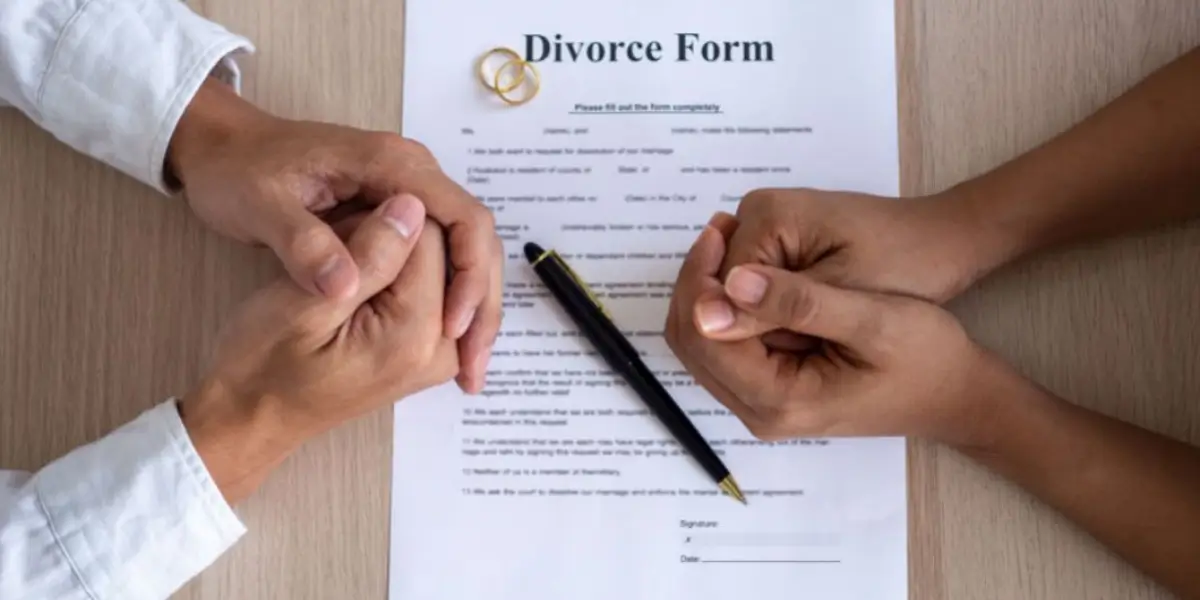
How to Get a Divorce in San Bernardino County
The first decision in any divorce process by the filing spouse is to decide which type of divorce they want to seek. In California, there are three ways to divorce:
- Uncontested. In an uncontested divorce, spouses state that they agree to all terms of the divorce and do not require court interventions to settle disputes. This is an ideal type of divorce because it often saves time and money for the family involved as the couple can amicably resolve child support and custody, spousal support, and divisions of assets, debts, and property.
However, even if there is a path to resolution, it is important to have legal representation to make sure that you are reaching a fair agreement with your spouse.
- Contested. Contested divorces are more difficult and more costly, and can involve multiple areas of the legal system in order to help bring a fair resolution. Additionally, the process for a contested divorce can take a significant amount of time. Often contested divorces occur because spouses are unable to reach a fair agreement with each other and need the court’s intervention.
In this process, you should be prepared for the court to make the necessary decisions on your behalf. Your attorney can assist with the process and serve as your representative to reach a fair and equitable outcome.
- Summary dissolution. This option is available to those couples who have been married for less than five years, do not share any children or own any property together, and are free of any joint debts. In addition, you and your spouse agree to the terms of asset division and spousal support. This is the quickest way to divorce in California.
Once the petition indicating the type of divorce that will occur is processed by the clerk of court in the county where you or your spouse reside, the non-filing spouse can be served with the necessary documents and given 30 calendar days to respond to the summons. In this stage, the Standard Family Law Restraining Orders take effect, and both parties must not:
- Remove any minor children from the state of California, including for vacations.
- Cancel any insurance that is a benefit to the other spouse or their children.
- Change the status of any property by concealment, encumberment, encumbrance, transfer, or disposal, including personal, communal, or separate property.
These restrictions, amongst others, help to prevent one or both spouses from hiding anything that would be involved in the final adjudication of marital assets, child custody, support, or spousal support.
The process for divorce takes a minimum of six months from the time the petition is filed. During this waiting period, there is an opportunity for the legal system to work through the details of the divorce and for the couple to settle matters through mediation or reconciliation. However, if the divorce is uncontested, the process can take much longer.
During the waiting period, either spouse can request temporary orders that establish many of the facets that must be finalized, including child custody and support, spousal support, property use, and in some cases, the handling of attorney fees. These orders are then finalized by a judge, which protects you throughout the process. These temporary orders can be requested on an emergency basis if you or your children are the victims of domestic violence.
The most tedious part of the divorce entails discovery, in which both parties are responsible for disclosing all financial ties, including, but not limited to, bank accounts, retirement savings, investments, and more. This also includes any evidence that either party wishes to introduce that can help show responsible care for children and the necessity for spousal support and may include depositions about the marriage.
All of this culminates with a decision by the court or an agreement through mediation that is finalized by a court, and a judge then signs off on the divorce with all legal decisions, which should include:
- Spousal support. Spousal support is determined by identifying the abilities and needs of each spouse in terms of maintaining a standard of living. In cases where there are significant discrepancies in income, support could be awarded on a temporary or permanent basis.
- Child custody. The agreements of custody should include whether there is partial or total custody by one spouse and what percentage of visitation the other spouse plans to have. The decision of custody is focused on the needs of the child and what serves their best interest.
- Child support. Unlike spousal support, child support is not based on income but on what financial responsibilities need to be met for the child’s well-being until they reach the age of 18.
- Property division. As a community property state, California seeks to provide equal distribution of assets, debts, and property regardless of which spouse is responsible for introducing it into the marriage. There is an assumption that the money spent by one spouse is with the support of the other spouse.
This complicated process is done in the midst of balancing the normalities of everyday routines such as work, school commitments, and community involvement. With the help of your San Bernardino family law attorney from the Law Offices of Michelanne Hrubic, you can continue your routines while your attorney serves on your behalf.
Understanding California Community Property Laws
Because California is a community property state, all of the property acquired during a marriage must be split 50/50 upon divorce. This includes:
- The marital home. Typically, the spouse who retains primary custody of any minor children stays in the home. They can do this in several ways. They can buy out their spouse by paying them 50% of the home’s net equity, provide other assets comparable in worth to the home, or defer the sale until a specific goal or date is reached, such as a minor child’s 18th birthday.
- Retirement accounts and pensions. Dividing employer-sponsored retirement accounts requires obtaining a Qualified Domestic Relations Order (QDRO). This order allows a portion of a retirement account to be transferred to an alternate payee, in this case, the spouse receiving the funds. You don’t need a QDRO to divide individual retirement accounts. In all cases, only the funds and interest accumulated over the course of the marriage are eligible to be divided.
- Businesses. Dividing a business can be complex and may require the help of a business valuation professional. They can evaluate the company’s assets, liabilities, revenue, and goodwill to determine the true worth of the company and how much of it is considered community property. If you owned a business before the marriage started, but it grew over the course of the marriage, the growth is still subject to division.
- Hidden assets. Spouses sometimes attempt to hide assets from each other to avoid dividing them fairly. We can help you uncover hidden assets, such as secret bank accounts or properties, by engaging the help of a forensic accountant to evaluate tax returns, financial documents, and public records. We can also use the legal discovery process to uncover hidden assets.
If you have a particular asset that is important to you, such as the family home or a collection of jewelry or other expensive items, let us know. We can help you come up with a divorce agreement that allows you to retain ownership of that asset by offsetting it using other community property.
Child Custody and the Best Interest of the Child Standard
There are two forms of child custody:
- Legal custody. Legal custody refers to who makes decisions about things like your child’s schooling, extracurriculars, religion, and healthcare.
- Physical custody. Physical custody refers to where the child spends the majority of their time.
In determining who should have custody, judges consider the best interests of the child. They look for issues such as histories of abuse, substance abuse, or instability that could indicate parental unfitness, but in the absence of these problems, they often decide that joint custody is in the best interests of the child.
Spousal Support Factors
There are two kinds of spousal support available:
- Temporary support. Temporary alimony refers to alimony that is paid while a divorce is pending.
- Long-term support. Long-term alimony orders are issued when the divorce is finalized. They can last for years.
Factors that determine how much long-term support is ordered are described under California Family Code 4320. They include things like:
- How long the marriage lasted
- The living standard that was established during the marriage
- The earning capacity of each spouse
- Each spouse’s health and age
If changes in your material circumstances warrant a modification to your existing spousal support order, you can petition the court with the help of an attorney.
California’s Child Support Guidelines
California uses a uniform guideline outlined in California Family Code 4055. The formula used to calculate child support payments is:
CS = K[HN – (H%)(TN)]
In this equation, CS is the child support amount. K is how much of both parents’ income must be allocated for child support. HN represents the net monthly disposable income of the higher earner. H% is the percentage of time the higher-earning parent has primary physical custody or the average of the approximate amount of time the higher earner spends with each child, depending on custody arrangements. TN is both parents’ total net monthly disposable income.
In some cases, exceptions can be made to the formula. This may be the case for extremely high or extremely low earners. Judges may also make exceptions in situations where there is an extreme disparity in the parents’ housing costs that impacts the children’s living conditions. Parents can also agree to support amounts that deviate from the guideline as long as the agreement is in the best interests of the children and their needs are fully met.
Child support payments can also be recalculated if one or both parents’ material circumstances substantially change. You can speak with your attorney regarding your request to modify the existing support order.
How Much Does a Divorce Cost in California with a Lawyer?
The circumstances of each divorce or separation are different. Therefore, there is no set amount of time that a process can take. Depending on the type of divorce that is filed, the California court costs associated with your case, the complexity of the assets, debts, and property, and the willingness of the spouses to work through the process all play a role in the final costs. Additionally, attorney fees can vary.
It is wise to inquire about potential costs during your initial divorce case consultation, where you are able to provide an overview of your situation.
What Is the Cheapest Way to Get a Divorce in California?
An uncontested divorce is the most cost-effective way to dissolve a marriage. While some couples choose to attempt this process independently of an attorney and thereby only pay the court fees associated with filing, it is not recommended to do so. An attorney can make sure that you are receiving a fair and equitable resolution to the intricacies of your divorce. Even with hiring an attorney, this process is still a cost-effective resolution that could also save you time.
FAQs
Q: What Are Some Common Mistakes People Make During Divorces?
A: Some common mistakes people make during divorces include letting their emotions get in the way of informed decision-making, exchanging assets for the family home, and ignoring tax implications. People often underestimate how much cash they may need to cover immediate expenses, such as legal fees associated with the divorce, and daily living during the transition into single life, as well.
Q: Who Pays for a Divorce in CA?
A: Generally, each spouse pays for their own personal legal costs in a divorce in CA. However, the responsibility for paying court fees can depend on each spouse’s specific financial situation. There are also situations in which a higher-earning spouse may be ordered to pay for legal fees for a lower-earning spouse so that both sides have fair access to representation under Family Code 2030.
Q: What Is the 50/50 Rule in California?
A: The 50/50 rule in California requires that community assets and debts be divided equally during a divorce. This rule is codified under California Family Code 2550. It covers all community property, including earnings and income, real estate, vehicles, retirement accounts, and debts. Premarital assets, gifts, inheritances, and post-separation earnings are not divided.
Q: What Is the 10-Year Rule in California?
A: The 10-year rule in California refers to California Family Code 4336, which mandates that marriages that lasted 10 years or longer be officially classified as marriages of long duration, which directly impacts long-term support. While courts generally set automatic end dates for spousal support at half the marriage’s length for short-term marriages, they have full jurisdiction to determine how long support should last for a marriage of long duration.
Hire a Divorce Attorney at San Bernardino Family Law
Divorces and separations are difficult, emotionally charged processes that may test your strength and resilience. While the process is difficult, it is with the goal of entering a new part of your life with a fresh start. You may wish to hire a divorce attorney to assist you with this difficult transition.
At The Law Offices of Michelanne Hrubic, our knowledgeable and experienced attorneys are here to support you. We protect your rights in the process in order to reach the optimal outcome for you and your children. If you are considering a divorce or were served a divorce petition by your spouse, contact our offices today and let us help you reach the light at the end of the tunnel.
Contact Law Offices Of Michelanne Hrubic
How Can We Help You?
Fields Marked With An ” *” Are Required
"*" indicates required fields

Call Us Today(951) 888-0631
© 2026 The Law Offices of Michelanne Hrubic • All rights reserved.
Digital Marketing By 
*Images are obtained under license from Canva and other third-party stock image providers, with attribution included where required.